Pre-cut sandpaper rolls are a handy alternative to traditional sandpaper sheets and discs for many DIY and home improvement projects.
Instead of individual sheets, you get a long roll of abrasive material that you can cut or tear into whatever length you need.
Many DIY enthusiasts prefer using pre-cut sandpaper rolls for their versatility.
The convenience of pre-cut sandpaper rolls cannot be overstated, as they can be easily cut to size.
This format offers great convenience for projects that require custom-sized pieces of sandpaper or a continuous supply of abrasives.
In this guide, we’ll explore when to use pre-cut sandpaper rolls, how to choose the right grit for the job, how they compare to other sandpaper types, and common use cases in woodworking, automotive work, and drywall finishing.
Many DIY enthusiasts prefer using pre-cut sandpaper rolls for their versatility. The convenience of pre-cut sandpaper rolls cannot be overstated, as they can be easily cut to size.
Pre-cut sandpaper rolls are essential for achieving the best results in various projects.
Using pre-cut sandpaper rolls allows for precision in sanding tasks, enhancing both productivity and quality.
For custom jobs, pre-cut sandpaper rolls offer flexibility that sheets cannot match.

Disclaimer: As an Amazon Associate, I earn from qualifying purchases. This means I may earn a commission if you click on a link and make a purchase, at no additional cost to you.
What Are Pre-Cut Sandpaper Rolls?
In high-volume scenarios, the use of pre-cut sandpaper rolls significantly reduces downtime.
Sandpaper rolls are essentially long, continuous strips of sandpaper wound up into a roll. They come pre-cut to a specific width (often 1 to 4 inches wide) and can be torn or cut to any length you require. This means you’re not limited to a standard sheet size – you can get a small piece for a tight spot or a long strip for wrapping around a sanding block or tool. Some rolls even come in a dispenser box with perforations or a cutting edge, making it easy to tear off just the right amount.
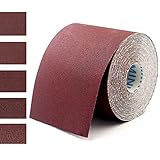
Pre-cut sandpaper rolls excel when working on intricate and detailed tasks.
Many professionals rely on pre-cut sandpaper rolls for their efficiency and ease of use.
Utilizing pre-cut sandpaper rolls can help maintain a consistent finish across surfaces.
For those who value quality, pre-cut sandpaper rolls are a must-have in their toolkit.
In summary, pre-cut sandpaper rolls are invaluable for any sanding project.
Using pre-cut sandpaper rolls can dramatically enhance your sanding efficiency.
It’s imperative to choose the right grit when working with pre-cut sandpaper rolls.
Why choose rolls over pre-cut sheets or discs? For one, rolls give you flexibility. If you need a narrow strip to sand a groove or a long piece to fit a floor sander or drum sander, you can get it from a roll. There’s also less waste – you use only as much as you need instead of potentially wasting part of a sheet. Pre-cut sandpaper rolls are typically sold in various widths and lengths, so you can pick one that suits your project (for example, a 1-inch wide roll for detailed work, or a 4.5-inch wide roll for standard hand sanders). They come in many of the same abrasive materials and backing types as regular sandpaper, like aluminum oxide on paper or cloth backings, and even hook-and-loop (Velcro) backings for certain tools.
Pre-cut sandpaper rolls can simplify the sanding process and improve outcomes.

When to Use Pre-Cut Sandpaper Rolls
Pre-cut sandpaper rolls shine in situations where ease of use, convenience, or custom sizing is important.
Here are some scenarios when reaching for a sandpaper roll is your best bet:
- High-Volume or Repetitive Sanding: If you have a lot of sanding to do – say, smoothing dozens of wood pieces or prepping an entire car for repaint – a roll provides a continuous supply of sandpaper. In workshops and factories, rolls offer a “continuous supply of abrasive material” that workers can cut to size as needed, ensuring efficient sanding with minimal waste. DIYers will appreciate not running out of sheets mid-project.
- Custom Sizes and Odd Shapes: Because you can cut any length, rolls are perfect when using custom sanding tools or tackling irregular surfaces. For example, if you have a sanding block or a homemade tool that isn’t a standard size, you can cut a strip from the roll to fit it exactly. If you’re sanding something round or an odd shape, you can even wrap a strip from a roll around the object. Narrow roll strips (often 1 inch wide) are “ideal for wood turners and anywhere detailing is needed”, as they are perfect for tight spaces and can be wrapped around spindles or dowels to sand curved surfaces.
- Convenience and Quick Replacement: Pre-cut sandpaper rolls are also very convenient for tools like drum sanders or longboard sanders. Many drum sanders use sandpaper strips wrapped around a rotating drum. You can buy precut strips made for your specific machine (for example, a certain length and with tapered ends), which makes changing the sandpaper fast and foolproof. Likewise, in auto body work, long continuous rolls (often 2¾″ wide with adhesive or hook & loop backing) can be cut to the length of your sanding block or board, then peeled off and replaced quickly when worn out. This is much easier than dealing with multiple short sheets.
- Dispenser Use: Some sandpaper rolls come with or can be loaded into a dispenser. For instance, you might mount several rolls of different grits in a wall-mounted dispenser in your workshop. The dispenser keeps them organized and lets you pull and tear off a strip with a built-in cutter. This way, it’s “perfect for dispensing just the right length” for any task, and you can quickly grab a new strip when you need it.
In summary, use pre-cut sandpaper rolls when you want maximum flexibility and efficiency in your sanding.
They’re especially useful for big projects, custom jobs, or when your sanding tool or target surface doesn’t match the size of a standard sheet.
While rolls may require a scissors or knife to cut (a small extra step), the payoff is in convenience and less material wasted.
In various applications, pre-cut sandpaper rolls stand out for their performance.
Using pre-cut sandpaper rolls allows for seamless transitions between sanding grits.
Sandpaper Roll Grit Ranges and Best Uses
Just like regular sandpaper, rolls come in a range of grit levels from very coarse to very fine. Choosing the right grit is key to getting good results, so let’s break down the common grit categories and what they’re best for:
Whether in the shop or on-site, pre-cut sandpaper rolls provide agility in sanding tasks.
- Coarse Grit (40–80 grit): These are the roughest grits and feel quite gritty to the touch. Coarse grits are ideal for heavy material removal. Use them for tasks like stripping off old paint or varnish, quickly smoothing very rough wood, or aggressively shaping wood and metal. For example, a 40- or 60-grit roll can take off multiple layers of paint or shape a piece of lumber with ease. In auto work, coarse grits (around 40–80) are used to grind down body filler or remove rust down to bare metal. Keep in mind, coarse grits leave scratches, so you’ll usually follow up with finer grits.
- Medium Grit (100–150 grit): Medium grits are great for general-purpose sanding and smoothing. After the coarse grit has done the heavy removal, medium grit sandpaper will remove the scratch marks and flatten out the surface. In woodworking, this range (often 120 grit is a go-to) is used to smooth wood after cutting or planing, and to sand out small imperfections. It’s also the coarsest you’d typically go on drywall – usually 120 grit is used to start smoothing dried joint compound without gouging the drywall paper. Medium grits can also prep a previously painted surface by scuffing it so new paint will adhere.
- Fine Grit (180–220 grit): Fine sandpaper rolls are used for finishing touches. They create a smooth surface ready for paint or finish. For instance, after using medium grit on wood, you’d switch to fine (180 or 220) for the final pass before applying stain or paint. Fine grits are also used between coats of paint or polyurethane on wood – a light sanding with 220 grit between coats helps the next coat bond and levels out dust nibs. When sanding drywall, you would do the final sanding with fine grit (150, 180, or even 220) to eliminate any last tiny ridges or scratches so the wall is perfectly smooth for painting.
- Extra Fine (320 grit and above): These grits feel almost smooth and are used for ultra-smooth polishing and specialty work. In woodworking, extra fine grits (320, 400) might be used to sand a final coat of finish lightly or to sand raw wood very smooth for high-gloss finishes. In automotive projects, super fine grits (400, 600, 1000+) are common for sanding between coats of paint or clear-coat, and for “wet sanding” a finish to a mirror shine. For example, auto body shops often sand primer with 400–600 grit, and color-sand clear coat with 1000–2000 grit for a showroom finish. Not all rolls go this high in grit, but many pre-cut rolls do offer grits up to 400 or 600 for fine finishing needs (and you can always get separate wet/dry sheets for ultra-fine work). As a rule, the higher the grit number, the less material it removes and the smoother the finish.
Remember that you typically work through grits in stages: start with a coarse enough grit to do the tough work, then move to medium, then fine to finish. If you start too fine, you’ll spend a lot of time and still not remove deep scratches or material. Conversely, if you stay too coarse, you’ll have a rough result. Rolls usually make it easy to switch grits – you can tear off a new strip in a finer grit and continue sanding without missing a beat.
Woodworkers appreciate the efficiency that pre-cut sandpaper rolls bring to their projects.
Rolls vs. Sheets vs. Discs: A Quick Comparison
You might be wondering how sandpaper rolls stack up against the other common sandpaper formats – namely, sheets and sanding discs. Each has its place, and sometimes it’s best to use them together on a project (for example, using sanding discs on a power sander for big areas and rolls or sheets for hand work and edges). Here’s a brief comparison:
- Sandpaper Rolls: Advantages: Very cost-effective for large projects (you get a lot of sandpaper per roll). Completely customizable size – cut just what you need, which is great for custom tools or odd jobs. Excellent for curved or detailed surfaces since you can cut narrow strips and even wrap them around shapes. Disadvantages: You do have to cut or tear it yourself, which adds a tiny bit of effort. Not as immediately ready-to-use as a precut sheet – if you just need a quick piece, a roll requires that extra step of cutting. Also, if not stored or managed well, a roll could be wasted (e.g. if it gets kinked or damp).
- Sandpaper Sheets: Advantages: Convenient and ready to use out of the package in a common size (often 9×11 inches). Easy to wrap around a sanding block or cut into smaller pieces if needed. Great for small or one-off tasks – just grab a sheet in the grit you need. Little to no prep time and easy to store flat in a drawer or folder. Disadvantages: Sheets are a fixed size, so you might end up wasting part of it or taping sheets together for a larger sander. They can be more expensive per square inch than buying in roll form. Also, if you need a strip longer or narrower than the sheet, you have to improvise.
- Sanding Discs: These are circular sandpaper pieces (often 5 or 6 inches in diameter) that typically attach with hook-and-loop or adhesive to power sanders (like orbital or disc sanders). Advantages: Fast material removal on large areas when used with a power tool – great for floors, tabletops, or auto body panels. Discs are quick to change on the sander, and the holes in many discs help with dust collection. Disadvantages: They are limited to use with the matching power tool; you can’t really use a disc by hand on flat surfaces effectively. They also come in set sizes, so they can’t be customized like a roll. For inside corners or detailed hand sanding, discs aren’t useful – that’s where you’d switch to sheets or rolls. Discs can also be pricier, especially the high-end ones, and you may go through many for a big job.
In short, sandpaper rolls offer flexibility and economy, sheets offer grab-and-go convenience, and discs offer speed on power tools. Many DIYers keep all three around. For example, when refinishing a piece of furniture, you might use discs on a power sander for the large flat surfaces, then use a roll to tear off a strip for hand-sanding the legs or spindles, and maybe a leftover sheet for sanding a small detail or tight spot. It’s all about using the right tool for the job.
Woodworking Applications
Sanding curved wooden pieces is easy with narrow sandpaper roll strips. Woodworkers often use rolls to wrap around dowels or sanding blocks for detailed sanding on spindles, chair legs, and carvings.
When it comes to woodworking, pre-cut sandpaper rolls are incredibly useful across a range of tasks – from rough carpentry to fine furniture making. Here are a few ways DIYers and woodworkers use them:
- Sanding on a Lathe (Woodturning): If you do woodturning (making things like bowls, pens, or table legs on a lathe), you’ll love sandpaper rolls. As a piece spins on the lathe, you can hold a strip of sandpaper roll against it to smooth it. “The rolls are 1″ by 20 feet long… ideal for wood turners” because the narrow strip can follow along the curves of a spindle or bowl. The strip can be easily wrapped around objects, letting you sand 360° around something like a dowel or spindle evenly. With grits up to 400–600 available in rolls, you can sand a turned piece through all the steps to a fine finish without switching to another format.
- Detailed Hand Sanding: For intricate woodwork – say, a piece of furniture with moldings, tight corners, or cut-out designs – sandpaper rolls let you cut small pieces or thin strips that might be more efficient than trying to fold a large sheet. You can cut a strip to sneak into a groove or wrap a piece around a custom-shaped sanding block to fit a profile. This makes rolls perfect for “detail work, small projects and much more” in the wood shop. For example, when refinishing a chair, you might tear off a slim piece to sand between chair back spindles or in decorative cutouts where a standard sheet is awkward to use.
- General Sanding and Surface Prep: You can also use sandpaper roll strips on sanding blocks or just by hand on flat wood surfaces. If you have a roll that matches the width of your sanding block, it’s very convenient – just cut a piece to the block’s length. For instance, 4½-inch wide adhesive sandpaper rolls exist for quarter-sheet finishing sanders; you “simply tear the paper to the size of your sander” for a perfect fit with no waste. Whether you’re leveling a glued-up panel or sanding a tabletop, a roll ensures you can keep feeding fresh sandpaper as you need it. This is cost-effective during big sanding jobs like stripping an old finish from a table – you might go through many pieces of sandpaper, and a roll makes it easy to grab another piece when one dulls.
- Between Finish Coats: Woodworkers often sand lightly between coats of varnish, polyurethane, or paint on wood to ensure good adhesion and smooth out dust bumps. Fine-grit roll paper is great for this because you can cut just a small square or whatever size fits your hand or sanding pad. Using a roll, you could prepare a stack of pre-cut pieces (for example, a bunch of 220-grit squares) before you start the finishing process. As each coat dries, you quickly do the inter-coat sanding with those pieces. This way, you’re not re-using a clogged-up piece of paper too long – you have plenty on the roll if you need a fresh bit.
In summary, sandpaper rolls are a woodworker’s friend for everything from rough shaping to delicate finishing.
They combine well with power sanding: use your power tools for the broad strokes, then grab a roll to handle the details.
With the variety of grit available on rolls, you can take a woodworking project through the full progression of sanding steps smoothly.
And any time you find yourself thinking “I wish I had a piece of sandpaper this long or this narrow,” a roll is the solution!
In summary, sandpaper rolls are a woodworker’s friend for everything from rough shaping to delicate finishing. They combine well with power sanding: use your power tools for the broad strokes, then grab a roll to handle the details. With the variety of grit available on rolls, you can take a woodworking project through the full progression of sanding steps smoothly. And any time you find yourself thinking “I wish I had a piece of sandpaper this long or this narrow,” a roll is the solution!
Automotive Applications
Pre-cut sandpaper rolls are widely used in auto body work. In the image above, a technician hand-sands automotive body filler using a sanding block wrapped with sandpaper from a roll – ideal for smoothing contours on car panels.
Auto repairs and painting involve a lot of sanding – from stripping paint to smoothing body filler and scuffing up primers. Pre-cut sandpaper rolls are very popular in these tasks, particularly in the form of longboard sanding rolls and sticky-back strips:
- Body Filler Shaping and Paint Removal: In collision repair or car restoration, after applying body filler (bondo) to dents, you need to sand it to the correct shape. This is often done with a long sanding board or an air file sander for flat panels. Sandpaper rolls are made for these tools. For example, a common roll is 2¾ inches wide and comes in a 20 or 30 yard roll, with either PSA (adhesive) backing or hook & loop backing to stick on the sanding board. You cut a piece as long as your sanding board, stick it on, and you’re ready to go. Coarse grits (40–80) on these rolls are “ideal for rough shaping body filler, removing old paint, and rough feather edging” of repair areas. In practical terms, that means you’d start with a 40 or 80 grit roll to quickly knock down high spots in filler or grind off rust and paint down to metal. The continuous roll means if one section clogs with filler, you can tear it off and advance to a fresh section easily.
- Panel Sanding with Longboard Sanders: For larger flat areas like car doors, hoods, or panels, auto body pros use long sanders (either manual longboards or pneumatic files). Sandpaper rolls are basically the only way to supply these tools. They allow long, even strokes that feather out repairs smoothly into the surrounding metal. With a roll, you ensure the paper spans the full length of the sanding board for uniform contact. Many modern longboard rolls have a hook & loop (Velcro) backing, which “enables it to be used on a wider variety of tools” and makes changes quick. For example, Dura-Gold offers a hook & loop longboard roll so you can use it on a hand block or an air sander interchangeably. This flexibility is great for auto-sanding because some curves you might do by hand, others by machine, but one roll can serve both.
- Smoothing and Prep Work: After the coarse stage, you’ll move to medium grits (120–180) on the same areas to refine the surface. A medium-grit roll will take out the deep scratches from the 80 grit and start smoothing the edges of sanded areas. If you repaired a spot on a fender, by the time you’ve used something like 180 grit on a longboard, the filler should blend into the metal nicely and the old paint around it will be scuffed and feathered. Then for the final paint prep, you switch to fine grits. Often 220–320 grit is used on primer or putty to get it ready for paint. Rolls in these grits ensure you can cover large areas (like an entire primed door) with consistent abrasion. Some auto painters even use a 400-grit roll to scuff up the blending areas on old paint, so the new paint will adhere well. Because the roll gives you a continuous supply, you don’t hesitate to change out a piece when it gets loaded with dust – that’s important for not scratching the surface with clogged paper.
- Wet Sanding and Finishing: Wet sanding in automotive refers to using very fine grit sandpaper with water to level and polish paint or clear coat. Typically, wet sanding is done with sheets of silicon carbide paper (grits like 1000, 1500, 2000) rather than long rolls. However, for convenience, some brands offer pre-cut strips in a roll for wet sanding as well. These are often used with sanding blocks for color sanding a freshly painted surface to remove orange peel (texture) before buffing. If you had such a roll, you could cut, say, a 5-inch piece of 1500 grit to wrap around your sanding block, dip it in water, and sand away. After it dulls, tear a fresh piece from the roll. This is less common than dry-sanding rolls, but it’s worth noting that sandpaper rolls can cover even the fine end of auto finishing.
In summary, pre-cut sandpaper rolls are a staple in automotive sanding because cars have large surfaces and unique tools that benefit from custom sandpaper lengths. Whether you’re repairing a small rust spot on your car or doing a full repaint, using rolls allows you to cut pieces that fit your sanding boards or blocks perfectly, maintain consistent sanding pressure, and swap out paper quickly as it wears. From the rough work (like knocking down body filler) to the fine work (smoothing primer and scuffing paint for blending), there’s a sandpaper roll and grit that’s “just right” for the task.
Drywall Applications
Sanding drywall is a dusty but necessary task when you’re finishing new drywall or patching holes. Usually, after applying joint compound (mud) over seams and screws, you need to sand it smooth. Pre-cut sandpaper rolls can be very useful for drywall work, primarily because you often need longer pieces of sandpaper for pole sanders and you’ll go through a lot of abrasives on big drywall jobs.
Drywall professionals often utilize pre-cut sandpaper rolls to streamline their work.
- Pole Sanders and Hand Sanders: Drywallers commonly use a pole sander – a flat sanding head on the end of a long pole – to reach high walls and ceilings. These typically accept a sheet around 4½ inches by 10‑3/4 inches (roughly the size of a half-sheet of sandpaper). You can buy pre-cut drywall sanding sheets in those dimensions, but you can also use a sandpaper roll. If you have a roll that is the right width (for instance, some rolls are made 4½″ wide specifically for this), you can just cut a piece off the roll long enough to clamp into the pole sander. This is convenient because drywall sanding can chew up paper quickly – if one piece clogs with dust or rips, you can tear a new one from the roll and keep going. Some rolls are even mesh or have anti-clog coatings ideal for drywall dust.
- Recommended Grits for Drywall: Drywall compound is relatively soft, so you generally use medium to fine grits. A common approach is to start with 120 grit, then finish with 150 or 180 grit for a smooth result. You typically wouldn’t use anything coarser than 100 on drywall, because “anything below 100-grit can damage the drywall surface” by tearing the paper face. Pre-cut rolls usually cover this range nicely – you can get rolls in 120, 150, 180, etc. In fact, one drywall tool supplier notes that “most drywall projects should be finished with sandpaper in the 150–220 grit range”. If you’re a first-timer, sticking with 150 grit is a safe bet to avoid scratching the drywall. And if you plan to do a final touch-up sanding, 220 grit from a roll will yield an ultra-smooth finish ready for paint (though often 180 is sufficient). Some pros even go over the dried texture with extra-fine 220+ if they know they’ll use a gloss paint that shows every flaw.
- Using Rolls for Corners and Detail: Sanding inside corners or around electrical outlets can be tricky. Many people use a sanding sponge for corners, but you can also fold a piece of sandpaper. With roll sandpaper, you could cut a smaller piece that’s easier to handle than a full sheet. Also, for detail sanding (like feathering the edge of a patch on a textured wall), a small snippet from a roll might give you more control. Cloth-backed rolls can be useful here because you can hold and flex them without tearing. Some rolls marketed as “shop rolls” or “abrasive shop rolls” are cloth-backed and can be cut to any size – these are “ideal for smoothing drywall joints and removing excess compound”, and the cloth backing helps them last longer when sanding by hand.
- Dust Management: One thing to be aware of: drywall sanding is very dusty. Using a fresh piece of sandpaper (from your roll) when the old one clogs will make the job go faster and cleaner. Clogged paper doesn’t cut well and can scratch. So, having that big roll of sandpaper encourages you to switch out paper often – which is good practice. Additionally, consider using screens (open-mesh sanding sheets) or a vacuum attachment if dust is a big concern. Some newer sandpaper rolls have stearate or “no-clog” coatings (often called “gold” sandpaper) that “prevent clogging and ensure consistent performance” by shedding the drywall dust instead of loading up. These can be worth it for large jobs since you’ll go through fewer pieces.
Overall, pre-cut sandpaper rolls are a smart choice for drywall work because they match the scale of the task. Drywall involves big surfaces and repetitive sanding – a perfect scenario for pulling long strips of sandpaper from a roll as needed. By selecting the right grit (start medium, finish fine) and using the roll to cut pieces sized for your sanding pole or hand sander, you’ll achieve walls and ceilings that are smooth and paint-ready. Just don’t forget the goggles and dust mask!
Conclusion
Pre-cut sandpaper rolls are a versatile and user-friendly option that can make sanding tasks easier for both general consumers and DIY enthusiasts.
They combine the benefits of customization, convenience, and often cost savings.
Whether you’re stripping an old cabinet, smoothing out auto body filler, or feathering drywall seams, having a roll of sandpaper at your side means you’ll always have the right size and grit on hand.
Remember to choose the appropriate grit for your task – start coarse for heavy removal and work up to fine for finishing – and don’t be afraid to cut that perfect piece for the job.
With the tips in this guide, you can confidently use sandpaper rolls to tackle woodworking projects, car repairs, drywall finishing, and more, all while achieving a smooth, professional-quality finish on your work.
Happy sanding!
Sources:
- Red Label Abrasives – Benefits of sanding rolls and choosing the right grit
- FastPlus Abrasives – Differences between sandpaper rolls vs. sheets and when to use each
- Peachtree Woodworking – Sandpaper roll dispenser and uses in woodturning
- Benjamin Moore – Recommended sandpaper grits for wood and drywall
- Dura-Gold Product Description – Use of coarse grit roll for auto body filler and paint removal
- Empire Abrasives – Drywall sanding grit recommendations and uses of shop rolls